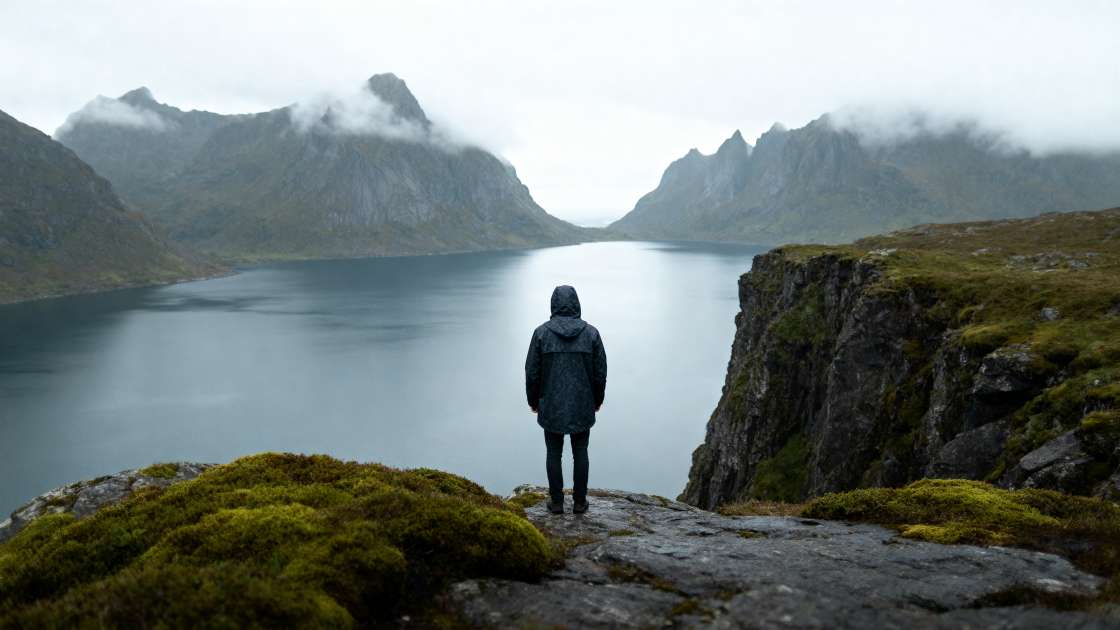
I've spent years watching people obsess over their seasonal color palettes—cool this, muted that, deep whatever. Mostly it struck me as an elaborate excuse to shop for new scarves. But then I landed in Scotland in late September, walked out of the airport into a wall of slate-grey mist, and thought: Christ, this place is a color palette. Not the sunny, postcard kind that makes you squint and feel obligated to be cheerful. This was different—moody, heavy, quietly beautiful in a way that didn't demand anything from you. The landscape looked like someone had taken all those Deep Summer swatches—the teals, the plums, the dusty roses—and built an entire country out of them. For once, the color theory obsessives might be onto something. This isn't about matching your handbag to your surroundings. It's about finding a place that feels like the visual equivalent of your own frequency, where even the weather seems to understand that not everything needs to be bright and loud.
Вкратце: Scotland is your destination if you're chasing moody landscapes and cool-toned drama. The Isle of Skye and Glencoe are non-negotiable stops. Pack a proper waterproof jacket with a hood—not some flimsy raincoat, but something that can handle horizontal rain. Budget around £120-150 per day for mid-range travel. Rent a car; public transport will leave you stranded in the middle of nowhere watching sheep. Visit late August through October when the heather turns that dusty plum color and the crowds thin out.
What Is the Deep Summer Palette Aesthetic?
The Deep Summer palette—or Dark Summer if you're reading American color analysis blogs at 2am—sits in this strange, appealing space between seasons. It's cool or neutral-cool, which in travel terms means you're looking for landscapes scrubbed clean of warm yellows and oranges. No Mediterranean sun-blasted hillsides. Instead, think misty mornings where the light comes through as a kind of pewter glow, waters that read as blue-grey rather than turquoise, stone that's been weathered to the color of old graphite. Scotland delivers this without trying. The light here has a filtered quality, like it's been passed through layers of cloud before it reaches you.
Then there's the muted saturation. Colors here don't shout. They've been dusted with grey, softened, made complex. I stood on a beach in the Outer Hebrides watching fog roll in over water that was simultaneously green, grey, and blue, and none of those colors were bright. The effect was hypnotic in a low-key way—no drama, just depth. Ancient stones, overcast skies that somehow make everything look richer rather than drearier, coastlines where the fog sits so thick you can barely see fifty meters. This is muted saturation in three dimensions.
The depth component is what separates this from your standard light summer palette. We're not talking pastels. The forests here are dark green verging on black in the right light. The lochs—those long, narrow lakes—are so deep they look like smoky navy ink. The mountains cast shadows that are practically purple. Edinburgh Castle squats on its volcanic rock looking heavy and permanent, the kind of structure that has actual visual weight. Nothing about Scotland is wispy or delicate.
The color families map directly onto what you'll see: deep berries in the heather that covers the hillsides, dusty roses in the way light fades over the Highlands at dusk, blue-greys in every stone building older than a hundred years, smoky navies in Loch Ness and a dozen other bodies of water, soft burgundy in the autumnal foliage that creeps across the glens. I'm not a believer in cosmic alignment, but walking through Glencoe in October wearing a charcoal wool sweater, I felt oddly… camouflaged. In a good way.
How to Get to Scotland and Begin Your Journey
Getting to Scotland from Russia in 2026 involves threading through the current political and logistical mess with more patience than I naturally possess. Direct flights don't exist, so you're looking at connections. From Moscow or St. Petersburg, your realistic options run through hubs that are still playing nice with both sides: Istanbul on Turkish Airlines, Dubai on Emirates, maybe Amsterdam or Helsinki if you're lucky with timing. Figure on 8-12 hours total travel time depending on your layover. I flew through Istanbul—three hours sitting in that massive airport eating overpriced börek and wondering why I didn't just go to Karelia instead.
You'll land at either Edinburgh (EDI) or Glasgow (GLA). Edinburgh's airport is smaller, easier to navigate, and the Airlink 100 bus into the city center runs every ten minutes, costs about £5, and takes thirty minutes if traffic cooperates. Glasgow Airport Express does the same job from GLA for similar money. Taxis exist but you'll pay £25-30 for the privilege of arriving fifteen minutes faster. I took the bus. It was fine. Scottish bus drivers have this remarkable ability to drive with complete indifference to both speed limits and passenger comfort.
The visa situation is the real headache. UK Standard Visitor visa, required for Russian citizens, needs to be sorted months in advance. You'll need proof of accommodation, return flights, bank statements showing you can afford to be there, possibly a letter from your employer, and a decent cover letter explaining why you're not planning to overstay. The process is bureaucratic in that special British way where everything takes longer than it should and costs more than it ought to. Budget £115 for the visa application fee alone.
Currency is Pound Sterling, and in 2026 it's still expensive relative to the ruble. I brought a mix of cash and cards. Cards worked everywhere except one particular fish shack on Skye where the owner looked at my Mastercard like I'd offered him Monopoly money. Cash saved me. The exchange rate will hurt, but there's no way around it.
Where to Stay: Accommodation with a Deep Summer Mood
Standard chain hotels in Scotland are aggressively beige and soulless, designed by people who think "cozy" means adding a tartan throw pillow to an otherwise sterile room. Skip them. If you're chasing the Deep Summer aesthetic—or just want to stay somewhere with actual character—you need to look harder.
In Edinburgh, boutique hotels occasionally get it right. The Witchery by the Castle is almost absurdly gothic, all dark wood paneling, deep red fabrics, and the kind of heavy curtains that block out both light and the 21st century. It's theatrical, yes, but it's also genuinely moody in a way that fits the city. Rooms cost £300-400 a night, which is obscene, but you're paying for atmosphere as much as accommodation. I stayed one night and felt like I was in a Victorian novel, which was either immersive or pretentious depending on my mood.
Castle hotels are the ultimate move if you can afford it or justify it to yourself. Inverlochy Castle near Fort William or Glenapp Castle in Ayrshire both deliver that sense of historical weight—thick stone walls, rooms with actual fireplaces, furniture that's older than your grandparents. You're not just sleeping somewhere; you're inhabiting a specific kind of past. Prices run £400-700 per night. I couldn't justify it, but I drove past Inverlochy and stared enviously through the gates like a character in a period drama.
For something more practical, stone cottages in the Highlands offer solitude and self-sufficiency. I rented one outside Fort Augustus for three nights through a local lettings site—two bedrooms, working fireplace, views over a glen that was either stunning or bleak depending on the weather. £120 per night, no neighbors, just sheep and the occasional hiker. The isolation was either peaceful or unsettling. Probably both. Book these 3-6 months early, especially for late summer or autumn. The good ones vanish fast.
A 7-Day Itinerary: Exploring Scotland's Deep Summer Landscapes
Day one in Edinburgh hit me with that particular urban gloom I'd been hoping for. The Old Town is built from stone the color of wet slate, and in the rain—which started about ten minutes after I arrived—it all turned this dark, shining grey that looked like a stage set. I walked the Royal Mile, which is touristy and exhausting, bagpipes bleating from every corner, but duck into the closes—those narrow alleyways that drop off the main street—and suddenly you're in deep shadow, old buildings pressing in, everything cool and damp. Edinburgh Castle looms over it all with zero subtlety, just this massive grey bulk squatting on volcanic rock. I visited. It was crowded. The views were worth it.
By day two I'd had enough of the city's tourist churn and spent the afternoon in a pub called The Devil's Advocate, down some basement stairs, all dark wood and low lighting. Ordered whisky. Felt appropriately atmospheric. The next morning I picked up a rental car and pointed it toward Glencoe, which is about two hours north if you don't stop, longer if you do. The drive shifts from rolling farmland into something more dramatic—mountains shouldering up on both sides of the A82, the landscape turning deep green and grey in a way that feels almost aggressive. Glencoe itself is a glen—a valley—carved by glaciers and history and possibly violence, depending on which tour guide you believe. I stopped at the Three Sisters viewpoint (GPS: 56.6690° N, 5.1042° W) and stared at three massive ridges folding into each other, the whole scene soaked in that moody grandeur everyone promises but doesn't always deliver. This delivered.
Day three was the push to Skye, crossing at Kyle of Lochalsh over a bridge that used to charge tolls and now doesn't. The island announced itself in fog, which felt correct. Skye is muted and magical in a way that sounds like marketing nonsense but turned out to be factually accurate. I spent day four driving the Trotternish loop—stopped at the Quiraing, which is a landslip that created these bizarre green folds and rocky outcrops. The whole place looked otherworldly, like geology got drunk and made bad decisions. The Old Man of Storr is a rock pinnacle that juts up dark and imposing from the ridgeline; I hiked up in drizzle and mild wind, surrounded by people taking selfies and complaining about the weather. The Fairy Pools were next—a series of clear, cold pools connected by waterfalls, the water a deep, almost unreal teal. I didn't swim. Too cold, too sensible.
Day five was more Skye wandering—Neist Point lighthouse, dramatic cliffs, more fog. By day six I was ready for Loch Ness, which is long, narrow, and surrounded by forests so deep green they're almost black. The water itself is smoky navy, unreadable, and allegedly contains a prehistoric monster, which I didn't see but also didn't fully discount. Urquhart Castle sits on the shore, a ruin that's mostly just walls and atmosphere. Grey stone, dark water, the kind of scene that would be perfect for brooding if you're into that. I mostly just took photos and ate a sandwich.
Day seven looped back south via the Cairngorms, which is a massive national park of open moorland and mountains. Late summer means heather in bloom—dusty plum and soft pink covering the hillsides in this low, scrubby carpet. The light was soft, the landscape enormous and empty. It felt like an appropriate ending, driving through all that space with nobody around.
Tasting the Palette: Scottish Food and Drink
Scottish food has depth in the same way the landscape does—nothing bright or sunny, just rich, heavy flavors that make sense in cold, damp weather. Cullen skink is a smoked haddock soup that tastes like the sea and cream had a baby, smoky and thick and the kind of thing you eat in a pub by a fire while rain hammers the windows. I had it three times. Haggis is the national dish and also a test of your cultural flexibility—sheep's offal mixed with oats and spices, served with neeps and tatties (turnips and potatoes). It's savory, rich, and better than it sounds. Venison shows up on menus everywhere, dark meat with a deep, gamey flavor that pairs with red wine and feels appropriately medieval.
Seafood is abundant and comes from cold waters, which means it's fresh and slightly briny. Salmon, langoustines, oysters—all of it tastes clean in that cool-toned way that fits the palette. I had langoustines at The Three Chimneys on Skye, a restaurant that's been famous long enough to know it and charge accordingly. Expensive, but the food was faultless and the view over Loch Dunvegan was worth the £80 bill.
Whisky is unavoidable and honestly, why would you avoid it. Distilleries dot the landscape, especially on Islay, and the whisky ranges from light gold to deep amber, flavors from floral to peaty and medicinal. I did a tasting at a small distillery near Fort William—five drams, each one progressively smokier and more complex. The peatiest one tasted like campfire and antiseptic and somehow worked. Scottish pubs are where the whisky culture lives—dimly lit, wood-paneled, fires burning, locals nursing pints and small glasses of Scotch. The Ubiquitous Chip in Glasgow does excellent pub food in a setting that's cozy without being kitschy. I ate there twice and both times left satisfied and slightly drunk.
Traveler's Wardrobe: How to Pack for a Deep Summer Trip
Packing for Scotland means accepting that the weather will betray you at least once per day. I brought clothes in cool neutrals—charcoal, slate grey, navy, a soft taupe sweater I'd bought specifically for this trip. Everything layered. Base layer, fleece or wool sweater, waterproof shell on top. The color scheme meant I looked reasonably coordinated in photos without trying, which was a nice bonus, but more importantly, the cool tones matched the landscape in a way that felt oddly harmonious. I wasn't a visual intruder.
I packed accent pieces in Deep Summer colors—a teal scarf, a plum wool hat, a dusty rose base layer that I wore under everything. These weren't fashion statements so much as practical choices that happened to work aesthetically. Against the grey stone of Edinburgh or the misty greens of Skye, they looked… right. Not bright, not loud, just present.
Fabrics matter. Wool, cashmere if you can afford it, tweed if you want to commit to the theme. I bought a tweed flat cap in a shop in Inverness—deep blues and greens woven together—and wore it the rest of the trip. It kept my head warm and made me feel like I was cosplaying a local, which was either charming or ridiculous depending on who you ask.
Footwear is non-negotiable: waterproof hiking boots with actual grip. I wore mine every day except evenings in the city, when I switched to leather boots that were comfortable and less aggressively outdoorsy. The hiking boots saved me on muddy trails, wet rocks, and the general slipperiness of Scottish terrain. Don't compromise here.
What I didn't bring: anything in bright orange, sunny yellow, or neon anything. Those colors would have looked absurd against the muted, cool-toned landscape. A woman I saw at the Fairy Pools was wearing a vivid coral jacket, and she stood out like a traffic cone in a museum. Functional, maybe, but visually jarring.
Practical Tips for the Independent Traveler in Scotland
Late August through October is the move. Summer crowds have mostly cleared out by September, the weather is still tolerable, and the light takes on that long, slanting quality that makes everything look cinematic. The heather is often still blooming—dusty plum and soft pink covering the hills—and the trees start turning in October, adding cool burgundy and deep gold to the palette. I went in late September and the timing felt perfect, though "perfect" in Scotland still means rain, wind, and the occasional morning where you can't see twenty meters in front of you.
Rent a car. Public transport exists but it's limited, slow, and will leave you stranded in Fort William at 6pm on a Tuesday watching buses that don't go where you need them to. Driving is on the left, which took me about thirty minutes to stop panicking about. Single-track roads are common in the Highlands—narrow, winding, with 'passing places' every hundred meters or so. You pull over, let the other car pass, exchange awkward nods, continue. It's a system that works through mutual cooperation and mild anxiety.
Budget £120-150 per day if you're traveling mid-range. That covers a decent guesthouse or Airbnb (£60-80), meals (£30-40 if you mix pub lunches and modest dinners), petrol, and the occasional paid attraction. You can do it cheaper by self-catering and staying in hostels, or blow way past that by eating at nice restaurants and sleeping in castle hotels. I stayed somewhere in the middle and felt fine about it.
Scotland is safe in the way that makes you forget to worry. I left my car unlocked once by accident in a village near Skye and came back three hours later to find everything untouched. The bigger risk is the landscape itself—hiking in bad weather, which can turn dangerous fast. Check forecasts, tell someone where you're going if you're heading into remote areas, carry a phone and a basic first-aid kit. I did none of this perfectly but got lucky.
Midges are the one genuinely miserable thing. Tiny biting insects that swarm in summer, especially near water and in the Highlands. They don't carry disease but they're relentlessly annoying. I got swarmed once near Glencoe, forgot my repellent, and spent ten minutes swatting at invisible enemies while cursing quietly. Bring Smidge or Avon Skin So Soft. It works.
For souvenirs, skip the cheap tartan tat in tourist shops. Instead: a proper wool scarf in a tartan pattern that uses deep blues, greens, and reds. A piece of Harris Tweed if you find a good one. A bottle of single malt whisky from a distillery you actually visited. I brought back a scarf and a bottle of 12-year Oban. Both felt like they carried some of the place with them, which is the best you can hope for from a souvenir.